Gold Battle: An Interview with Dr. Ian von Lindern, Expert Witness in Lawsuit Alleging the Stibnite Gold Project in Idaho Will Increase Cancer Risk
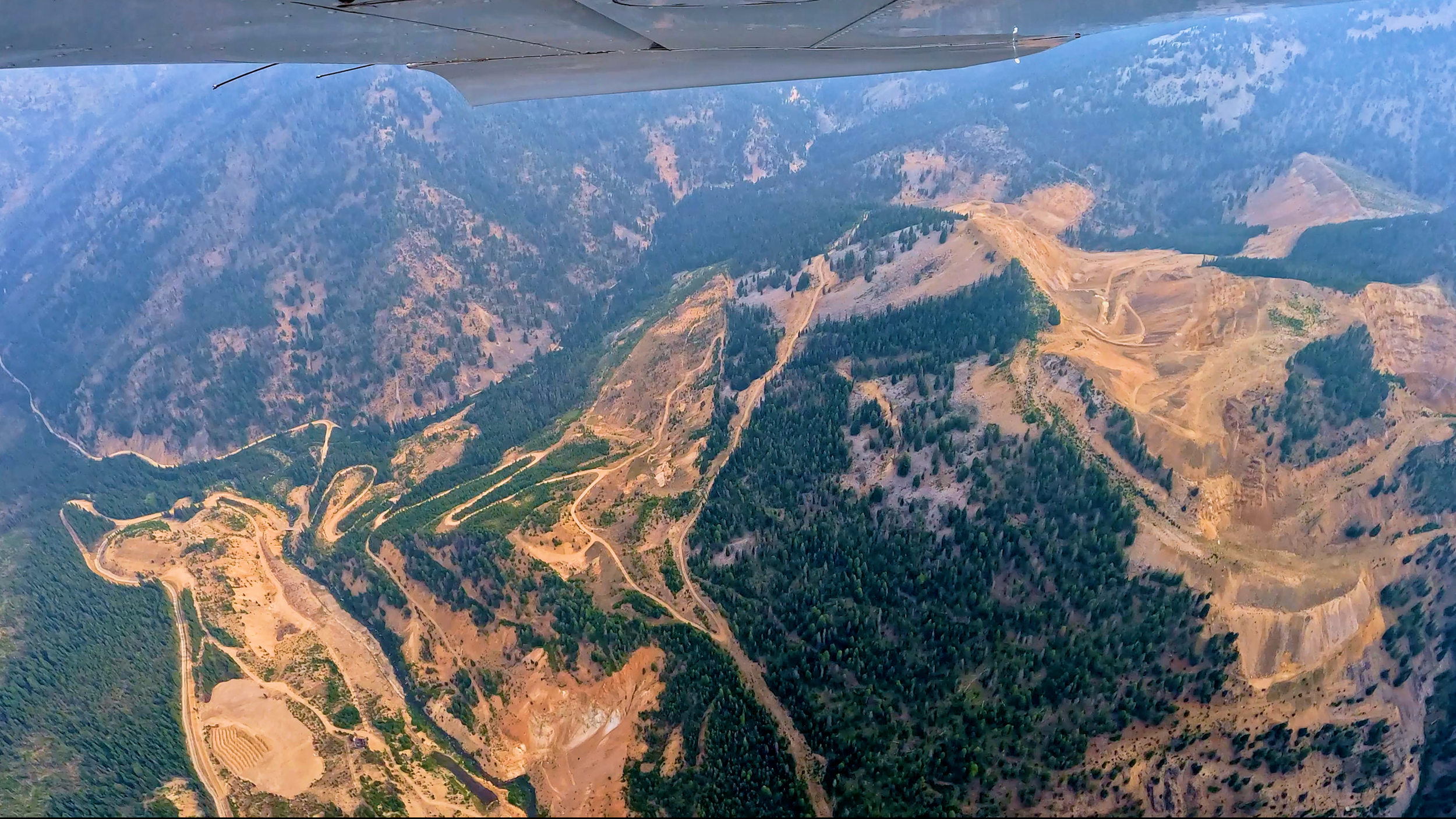
The abandoned, former gold mine and now Superfund Site where the Stibnite Gold Project is sited. Photo courtesy of EcoFlight
Gold moves from mine to market to body (or central bank vault) without a trace of the landscapes it originated from. While much of the conversation around ethical sourcing has focused on mining practices abroad, gold extraction in the United States deserves equal scrutiny. As it reshapes ecosystems, tests health and environmental protections, and violates Native American treaty-protected land rights, urgent questions arise about what it means to work with this material at all. In part 1 of this 2-part conversation, I speak with Dr. Ian von Lindern, an environmental health expert with decades of experience in mining cleanup and the co-founder of TerraGraphics International Foundation, about a newly approved massive, open-pit mine, the Stibnite Gold Project, in Idaho. Dr. von Lindern has testified in a lawsuit alleging the Stibnite Gold Project will increase cancer risk to local residents as it is currently being permitted.
Marilena:
Thank you so much for meeting with me. I’m working on a short documentary about the Stibnite Gold Project, and I’d love to ask you some questions.
Ian:
Let me ask you first—how did you get interested in this project?
Marilena:
When I became a jeweler, I started following news about gold—especially what’s called “artisanal small-scale mining,” “illegal mining,” and mercury contamination— issues that are more common overseas. Then I came across the Stibnite Gold Project in Idaho, and it really shocked me. I realized how little I knew about gold mining in the United States! It was from watching a presentation you gave that I learned if Nevada were a country, it would be the fourth-largest gold producer in the world.
It challenged the idea that gold mining happens elsewhere. I felt angry, honestly—especially seeing what the Idaho Conservation League, the Nez Perce Tribe, and others have uncovered. It feels like these issues are buried or erased.
Ian:
That makes sense. We’ve actually done a lot of work overseas in the gold industry—in Central Asia and Africa. In one case in Africa, hundreds of children died from lead poisoning related to gold mining.
Marilena:
That’s absolutely devastating. And I have to say—it feels strange that we’re even mining gold at all, given how much gold already exists above ground, lying around in bars.
Ian:
Gold prices drive everything. As prices rise—now approaching extremely high levels—more mining becomes economically viable, even in risky or marginal conditions.
Marilena:
Could we start with your background? I understand you came out of retirement to work in opposition to this project—is that right?
Ian:
That’s largely correct—though I’ve never really succeeded at retiring.
My wife and I ran an environmental consulting firm for about 40 years, focusing on Superfund cleanup—especially mining-related contamination. After selling the company, we started a foundation and began working internationally, often with Doctors Without Borders, helping communities affected by heavy metal poisoning from mining.
We’ve worked in Africa, Central Asia, South America, and elsewhere. That’s what we’ve been doing for the last 15 years.
The Stibnite Gold Project is close to home—it’s near where I grew up in Idaho. And more broadly, it represents the return of mining to the United States. Companies left decades ago to avoid stricter regulations, and now they’re coming back—for gold, silver, and also rare earth metals used in defense and renewable energy.
At the same time, they’re pushing to weaken regulations so they can operate more like they do in developing countries. That’s where the conflict is.
Marilena:
You’ve spent years dealing with the aftermath of mining contamination overseas. What connections do you see between those experiences and what’s happening now in the U.S.?
Ian:
The biggest connection is that harm increases when metal prices spike. In poorer regions, people turn to artisanal mining—often using dangerous methods like mercury extraction. In industrial settings, companies begin exploiting lower-grade deposits that weren’t previously viable.
Stibnite is an example of that. The gold there is microscopic—you can’t see it. Extracting it requires massive industrial infrastructure, including high-pressure processing systems.
Once that infrastructure is built, it opens the door for many more mines in the surrounding area to become viable. So one project can trigger a cascade of new mining activity.
Marilena:
So this isn’t just one mine—it could lead to many more?
Ian:
Exactly. Once the processing facility is in place, smaller deposits in the region suddenly become profitable. That’s a major concern.
Marilena:
What’s your perspective on re-mining orphaned or previously abandoned sites?
Ian:
We’re not anti-mining. In many parts of the world, mining is essential for people’s livelihoods. Our work often focuses on helping communities live more safely with it. The same applies here—we’re not opposed to mining returning to the U.S., but it must be done safely. We already have regulations that allow for that. The issue is that companies are trying to weaken those rules. In this case, the state of Idaho has agreed to proposed changes that could increase children’s cancer risk exposure by up to 1,000 times. That’s unacceptable. That's why we're against this. And it will be more expensive for the company to comply. There's no doubt about that. But that's an expense they should pay, because if they don't, we’ll pay for it in pollution cleanup, sick people, and destroyed environments.
Marilena:
Can you explain how those rule changes work, especially around cancer risk?
“This is an arsenic mine.” - Dr. Ian von Lindern
Ian:
Regulations are based on lifetime exposure—how much of a carcinogen, like arsenic, a person can safely encounter over 70 years. What’s being proposed here is to allow that entire lifetime exposure to occur over a much shorter period—potentially as little as six years. That means a child could receive a lifetime’s worth of exposure before even reaching elementary school. That’s a fundamental shift in how risk is managed, and it disproportionately affects children.
Marilena:
How would people actually be exposed?
Ian:
Primarily through airborne dust containing arsenic. It settles on surfaces—inside homes, on toys, in carpets—and children ingest it through normal hand-to-mouth behavior. So while it’s technically air pollution, the real exposure pathway is ingestion.
Marilena:
Is that contamination visible in any way?
Ian:
Not to the naked eye. But we use instruments—like X-ray fluorescence devices—that can detect metal concentrations instantly on surfaces. They’re essential tools in environmental cleanup work.
Marilena:
Do you think part of the issue is that people have forgotten what led to environmental regulations in the first place?
Ian:
Yes. Many of those lessons have faded from public memory. Superfund laws arose from crises in which communities unknowingly lived on toxic waste sites. Children were often the first to show symptoms—that’s why regulations are designed to protect them specifically. Now, there’s even an effort in some areas to reduce research into pediatric health impacts, because those findings often lead to stricter regulations.
Marilena:
Are we already seeing health impacts from these kinds of exposures?
Ian:
Yes. Pediatric cancer rates are increasing, even as survival rates improve. And that's because of a combination of lifestyle and many kinds of chemicals in our environment. There are a number of factors at play, but the one we can deal with is to limit these carcinogenic chemicals that are in food, air, water, and so on, which means we need to require industries to be more responsible, and that's where the battle happens.
Marilena:
Is there a way to mine this site safely?
Ian:
Yes. The ore could be transported to existing processing facilities in Nevada, where infrastructure already exists. The reason companies don’t want to do that is because building a new facility creates opportunities to expand mining across the region.
Marilena:
There are also legal challenges underway—can you speak to that?
Ian:
There are three lawsuits currently. One from environmental groups focused on ecological damage, one from the Nez Perce Tribe based on treaty rights, and another focused on air quality and cancer risk. I served as an expert witness on the latter.
Marilena:
Given that this project isn’t essential for national security or renewable energy, why is there so much political support for it?
Ian:
Money. The projected value of the gold has increased dramatically—now estimated at around $18 billion. A significant portion is owned by a major political donor. When prices rise, economic pressure intensifies—and so does political support.
Marilena:
That’s a powerful note to end on. Thank you so much for your time—I’d love to follow up again soon.
Ian
Of course. This issue isn’t going away anytime soon. There were a lot of gold atrocities in the United States, you know, a century or more ago, particularly with Native American Tribes.
Marilena
We’ll get into all of that.
This interview was conducted as part of development for “Gold Fools,” a short documentary about American gold mining. Watch the sizzle reel and show us some love if you’re so moved!
